
QUIC and HTTP/3: The UDP-Based Transport Revolution — 0-RTT, Connection Migration, and Stream Multiplexing Without Head-of-Line Blocking
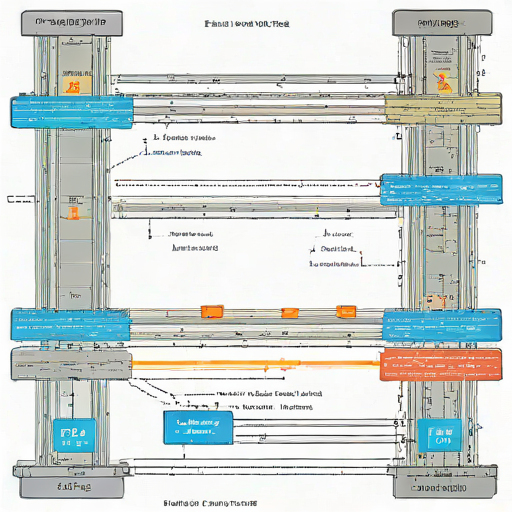
How QUIC rewrites the transport layer rulebook by moving TCP's reliability into userspace on top of UDP — 0-RTT handshakes, connection migration across IP addresses, and solving head-of-line blocking once and for all.
In 2012, Jim Roskind, a software engineer at Google, started experimenting with a radical idea: what if we replaced TCP — the transport protocol that has carried the vast majority of internet traffic since the 1980s — with something built on top of UDP? The result, after years of experimentation, standardization (IETF QUIC Working Group, 2016-2021), and deployment (Google’s servers, Chrome, YouTube, and now over 30% of all internet traffic), is QUIC — a transport protocol that is faster, more secure, and more adaptable than TCP, and that solves some of the most intractable problems that have plagued web performance for decades.
QUIC (which originally stood for “Quick UDP Internet Connections” but is now just a name, not an acronym) is the foundation of HTTP/3, the latest version of the Hypertext Transfer Protocol. Together, QUIC and HTTP/3 represent the most significant change to the internet’s transport and application layers since the deployment of TCP/IP itself. This post is a deep dive into QUIC’s architecture: how it eliminates head-of-line blocking, how it achieves 0-RTT connection establishment, how it handles connection migration, and why its tight integration with TLS 1.3 is both its greatest strength and its most controversial design choice.
1. The Problem: TCP’s Architectural Limitations
To understand why QUIC exists, we need to understand what is wrong with TCP. TCP provides a reliable, ordered byte stream between two endpoints. It handles congestion control, flow control, retransmission of lost packets, and reordering of out-of-order packets. This is exactly what most applications need — until it isn’t.
Head-of-line blocking (HOL blocking). TCP delivers data in strict order. If packet #3 is lost, packets #4, #5, and #6 are buffered at the receiver until packet #3 is retransmitted and arrives. For a single byte stream (like an HTTP/1.1 response body), this is fine — the application needs the bytes in order anyway. But HTTP/2 multiplexes multiple streams (requests and responses) over a single TCP connection. If a packet containing data for stream A is lost, all streams — including stream B, which is completely independent — are blocked until the lost packet is retransmitted. This is TCP-level HOL blocking, and it is a fundamental consequence of TCP’s ordered delivery guarantee.
Connection setup latency. TCP requires a three-way handshake (SYN, SYN-ACK, ACK) before any data can be exchanged. TLS 1.3 requires an additional 1-2 round trips for the cryptographic handshake. Together, that is 2-3 round trips before the first byte of HTTP data can be sent. On a transcontinental connection with 80 ms RTT, that is 160-240 ms before anything useful happens.
Connection migration. A TCP connection is identified by the 4-tuple (source IP, source port, destination IP, destination port). If any of these changes — say, because the user moves from Wi-Fi to cellular — the TCP connection breaks and must be re-established. This is a terrible user experience for mobile applications, where network transitions are frequent.
2. QUIC’s Architecture: Streams over UDP
QUIC solves these problems by building a transport protocol in userspace on top of UDP. Here are the key architectural components:
Streams, not a byte stream. QUIC multiplexes multiple independent streams within a single connection. Each stream is a reliable, ordered byte stream — but loss on one stream does not block any other stream. The QUIC packet format includes a stream ID in every frame header, so the receiver can deliver data from stream B to the application even if data from stream A is still missing. This eliminates HOL blocking at the transport level (though HOL blocking can still occur within a stream, and at the application level if the application requires cross-stream ordering).
Connection ID. QUIC connections are identified by a Connection ID (CID), not by the 4-tuple. The CID is a random value chosen by the endpoints and included in every packet. If the client’s IP address changes (e.g., Wi-Fi to cellular), the server recognizes the CID and continues the connection without interruption. This is connection migration, and it is transparent to the application.
0-RTT connection establishment. QUIC integrates TLS 1.3 directly into the transport handshake. For a new connection to a server the client has never contacted before, the handshake takes 1 round trip (the client sends a Client Hello with key share, the server responds with Server Hello, Finished, and data). For a connection to a server the client has previously contacted (and for which it has cached a pre-shared key, PSK), the client can send data in the very first packet (0-RTT). The server processes the Client Hello, decrypts the 0-RTT data, and responds — data is exchanged in 0 round trips, limited only by the network RTT.
Userspace implementation. QUIC is implemented in userspace (in the browser, in the web server, in a library like Google’s quiche or Cloudflare’s quiche), not in the kernel. This allows rapid iteration — protocol updates do not require kernel changes — and enables application-specific tuning of congestion control, loss detection, and flow control. The downside is that userspace networking has higher CPU overhead than kernel TCP (context switches, system call overhead), though kernel-bypass techniques (like io_uring and DPDK) are narrowing the gap.
3. QUIC Packet and Frame Structure
QUIC packets have a two-level structure: packets carry frames, and frames carry stream data or control information. This is in contrast to TCP, where the packet is just a segment of the byte stream with no internal framing.
    +------------------+
    |    UDP Header    |
    +------------------+
    |   QUIC Header    |
    | - Connection ID   |
    | - Packet Number   |
    | - Flags (key phase|
    |   etc.)           |
    +------------------+
    |   QUIC Frames     |
    | - STREAM frame    |
    |   (stream ID,     |
    |    offset, data)  |
    | - ACK frame       |
    | - PADDING frame   |
    | - ...             |
    +------------------+
    |   AEAD Tag       |
    | (authentication)  |
    +------------------+
Key frame types:
- STREAM: Carries application data for a specific stream. Includes a stream ID, an offset (for reordering), and the data.
- ACK: Acknowledges received packets. QUIC ACKs carry the list of received packet numbers, allowing more precise loss detection than TCP’s cumulative ACKs.
- PADDING: Adds padding bytes to obscure the true length of the data, mitigating traffic analysis.
- CRYPTO: Carries TLS handshake data. Handshake data is sent reliably over a dedicated stream (stream 0).
- NEW_CONNECTION_ID: Provides additional CIDs for connection migration.
- PATH_CHALLENGE / PATH_RESPONSE: Validates that the client is reachable at a new IP address before migrating the connection.
All QUIC packets except the initial handshake packets are encrypted with AEAD (Authenticated Encryption with Associated Data), using keys derived from the TLS 1.3 handshake. Even the packet number and flags are encrypted, making traffic analysis and middlebox interference significantly harder than with TCP+TLS.
4. 0-RTT and Its Security Implications
0-RTT is QUIC’s most dramatic performance improvement over TCP: for resumed connections, data flows immediately. But 0-RTT comes with a security caveat: 0-RTT data is not forward-secure. If an attacker records a 0-RTT packet and later compromises the server’s private key, they can decrypt the 0-RTT data. Furthermore, 0-RTT data is vulnerable to replay attacks — an attacker can capture a 0-RTT packet and retransmit it, and the server will process it again (potentially executing the same transaction twice).
QUIC mitigates 0-RTT replay by:
- Server-side replay protection. The server can reject 0-RTT data by requiring the client to complete the handshake before processing it. The client sends 0-RTT data optimistically, but the server can defer processing until the handshake completes.
- Client-side replay detection. The server can include a “server nonce” in its handshake response that the client uses to derive 0-RTT keys, ensuring that replay of a previous session’s 0-RTT data will be rejected.
- Application responsibility. Applications that use 0-RTT must be idempotent: replaying the same request multiple times should not have harmful side effects. This is the same requirement as for HTTP
GETrequests, and it is the application developer’s responsibility to enforce.
In practice, 0-RTT is safe for read-only requests (GET, HEAD, OPTIONS) but not for state-changing requests (POST, PUT, DELETE). Browsers typically use 0-RTT only for the initial page load (a GET request), while API clients may disable 0-RTT for mutating requests.
5. Connection Migration
Connection migration is one of QUIC’s most user-visible features. On a mobile device switching from Wi-Fi to cellular, TCP connections break and must be re-established. With QUIC, the client simply starts sending packets from the new IP address, using the same CID. The server sees a packet from a new IP with a known CID, and responds with a PATH_CHALLENGE frame to verify that the client is reachable at the new address. Once the client responds with PATH_RESPONSE, the server migrates the connection.
Connection migration enables seamless handover — the user’s video call or game session continues without interruption. It also enables multipath transport (sending data simultaneously over Wi-Fi and cellular for higher aggregate bandwidth and reliability), which is under active development in the IETF’s Multipath QUIC working group.
6. QUIC Deployment and Adoption
QUIC has been deployed at massive scale:
- Google: All Google services (Search, YouTube, Gmail, Maps) support QUIC. Chrome uses QUIC for all Google connections and for any server that advertises QUIC support via the
Alt-SvcHTTP header. - Cloudflare: Cloudflare’s edge proxies support QUIC and HTTP/3 for all customers (millions of websites), and Cloudflare’s “Spectrum” product supports QUIC for non-HTTP applications (gaming, VPNs).
- Facebook: Facebook’s mobile apps use QUIC for all API calls, reducing tail latency by 30-50% compared to TCP+TLS.
- Uber: Uber’s mobile apps use QUIC for real-time ride matching and location updates, benefiting from connection migration during driver and rider movement.
- IETF HTTP/3: HTTP/3 was published as RFC 9114 in June 2022, standardizing QUIC as the transport for the web. All major browsers (Chrome, Firefox, Safari, Edge) support HTTP/3, and major web servers (nginx, Apache httpd, Caddy, LiteSpeed) support it natively or via plugins.
As of 2025, approximately 35% of all web traffic uses QUIC/HTTP/3, and the percentage is growing steadily.
7. The Future: QUIC Beyond HTTP
QUIC is not just for HTTP. The IETF is developing extensions for:
- Multipath QUIC: Simultaneously using multiple network paths (e.g., Wi-Fi + cellular) for a single connection, for higher bandwidth and resilience.
- QUIC for DNS (DNS-over-QUIC, DoQ): Using QUIC instead of TCP or UDP for DNS queries, providing 0-RTT and connection migration for DNS.
- QUIC for media streaming: Low-latency video streaming over QUIC, replacing WebRTC’s SCTP-over-UDP for some use cases.
- QUIC for gaming: Real-time game traffic over QUIC, benefiting from connection migration and 0-RTT.
QUIC’s userspace implementation opens the door to application-specific transport optimizations that are impossible with kernel TCP — custom congestion control algorithms, custom loss detection, custom packet scheduling. This is the “transport as a library” vision, and it may prove to be QUIC’s most lasting contribution to internet architecture.
8. Summary
QUIC is the most significant evolution of internet transport since TCP was standardized in 1981. By moving transport functionality into userspace on top of UDP, QUIC eliminates head-of-line blocking, enables 0-RTT connection establishment, supports connection migration, and tightly integrates TLS 1.3 encryption. HTTP/3, built on QUIC, brings these benefits to the web, reducing page load times by 10-30% compared to HTTP/2 over TCP in real-world deployments.
QUIC’s success is a lesson in the power of rethinking fundamental assumptions. The internet had run on TCP for 40 years, and TCP’s limitations — HOL blocking, connection setup latency, inability to migrate — were widely accepted as inevitable. QUIC showed that they were not inevitable; they were just consequences of a design choice made in 1981 that no one had seriously re-examined. The next time someone tells you that a fundamental limitation of a protocol or an architecture is “just how things work,” remember QUIC.
9. QUIC Congestion Control: A Tale of Two Algorithms
QUIC inherits TCP’s congestion control problem: how fast should a sender transmit data without overloading the network? TCP’s canonical answer is the CUBIC algorithm (the default in Linux), which uses a cubic function to increase the congestion window after a loss event. QUIC implementations can use any congestion control algorithm, specified by the application or chosen by the library.
Google’s BBR (Bottleneck Bandwidth and Round-trip propagation time) is the default congestion control algorithm for Google’s QUIC implementation and for Chrome’s QUIC stack. BBR takes a fundamentally different approach from loss-based algorithms like CUBIC:
BBR’s model. Instead of using packet loss as a congestion signal (like CUBIC, which interprets loss as “the buffer is full”), BBR explicitly models the network path: it estimates the bottleneck bandwidth (the maximum data rate the path can sustain) and the round-trip propagation time (the minimum RTT, without queuing delay). BBR then sets its sending rate to the estimated bandwidth and its inflight data cap to the bandwidth-delay product (BDP = bandwidth × RTT). The idea is to operate at the “optimal operating point” — sending at exactly the bottleneck rate, keeping the pipe full but not overflowing the buffer.
BBR’s advantages. BBR achieves higher throughput and lower latency than CUBIC on paths with significant bufferbloat (excessive buffering in routers, which causes latency spikes when the buffer fills). BBR also handles random packet loss (common on wireless links) better than CUBIC, because BBR does not interpret random loss as congestion.
BBR’s controversies. BBR has been criticized for being unfair to other flows. In early versions, BBR could starve CUBIC flows sharing the same bottleneck by filling the buffer more aggressively. BBRv2 (the current version) addresses this by incorporating loss and ECN (Explicit Congestion Notification) signals, making it more TCP-friendly.
10. QUIC Security: Always Encrypted, Always Authenticated
One of QUIC’s most significant architectural decisions is that it encrypts everything possible. In TCP+TLS, the TCP header (sequence numbers, flags) is in the clear, visible to any middlebox on the path. In QUIC, the QUIC header is partially encrypted: the connection ID, version, and some flags are in the clear (to allow load balancers and connection migration), but the packet number and all frame data are encrypted with AEAD.
This has several security implications:
Ossification resistance. TCP has suffered from “ossification”: middleboxes (firewalls, NATs, load balancers) have baked in assumptions about TCP header format and behavior, making it difficult to evolve TCP (new TCP options are often blocked by middleboxes). QUIC minimizes the exposed header fields, making it harder for middleboxes to ossify the protocol. The long header (used during handshake) exposes some information; the short header (used for data) exposes almost none.
Privacy. QUIC encrypts not just the application data (as TLS does for TCP) but also transport-level metadata: packet numbers, ACK contents, frame types. This makes traffic analysis harder (an observer cannot see which packets are ACKs vs. retransmissions vs. data). However, traffic analysis is still possible based on packet sizes and timing; QUIC includes PADDING frames to allow the application to add padding and obscure the true data size.
Forward secrecy. QUIC inherits TLS 1.3’s forward secrecy: after a connection is closed and the keys are discarded, an attacker who later compromises the server’s private key cannot decrypt the recorded traffic. 0-RTT data is the exception — it is encrypted with a pre-shared key that is not forward-secure, which is why 0-RTT is safe only for idempotent requests.
11. QUIC and the Ossification of UDP
A cruel irony of QUIC’s design is that it may cause the ossification of UDP, the very protocol it uses to avoid TCP’s ossification. Middlebox vendors (firewall, NAT, DPI — Deep Packet Inspection) are beginning to inspect QUIC traffic and apply policies (block, rate-limit, prioritize) based on QUIC header fields. If middleboxes start to assume that all UDP traffic on port 443 is QUIC, or that QUIC connections always have a certain handshake pattern, future versions of QUIC may find it as hard to evolve as TCP.
QUIC’s defense against this is greasing: the protocol includes a mechanism for endpoints to send random values in certain header fields (version, extension types) to probe for middlebox interference. If a middlebox blocks a connection with an unknown version, the QUIC implementation learns that the path is ossified and can fall back to a known version or to TCP. Greasing is a clever defense, but it is an arms race: middleboxes adapt, QUIC adapts to the middleboxes, and the cycle continues. This is the fundamental tension of internet protocol evolution: the middleboxes that make the internet manageable also make it unchangeable.
12. Summary (Extended)
QUIC is the most significant evolution of internet transport since TCP was standardized in 1981. By moving transport into userspace on top of UDP, QUIC solves TCP’s fundamental problems — head-of-line blocking, connection setup latency, connection migration — while integrating TLS 1.3 encryption at the transport level. HTTP/3 brings these benefits to the web, reducing page load times and improving the user experience on mobile networks.
The lesson of QUIC is that architectural assumptions — TCP must run in the kernel, connections are identified by IP addresses, data must be delivered in strict order — are not laws of nature. They are design choices, and when those choices no longer serve the applications that depend on them, the right response is not to work around the limitations but to redesign the architecture. QUIC redesigned the transport layer. The next generation of internet protocols will build on its example.
13. QUIC’s Impact on Network Operations and Middlebox Design
QUIC’s encryption of transport-layer metadata has significant implications for network operations. Traditional network management tools rely on access to TCP headers (sequence numbers, flags) for performance monitoring, troubleshooting, and security. QUIC hides this information, forcing a redesign of network operations tooling.
What network operators lose with QUIC:
TCP sequence number analysis. Network operators use TCP sequence numbers to measure retransmission rates, estimate path latency, and diagnose packet loss. QUIC encrypts packet numbers, making this analysis impossible from passive observation. Operators must rely on QUIC endpoints to export telemetry (via qlog, the QUIC logging format) or infer performance from packet timing and size.
TCP flag analysis. TCP SYN, FIN, and RST flags are used by firewalls and DPI engines to track connection state. QUIC encrypts these equivalents, requiring middleboxes to infer connection state from traffic patterns (e.g., long idle period followed by a burst suggests a connection timeout).
TLS Server Name Indication (SNI). In TCP+TLS, the SNI (the hostname the client is connecting to) is sent in the clear in the TLS Client Hello. This allows firewalls to block connections to specific domains. QUIC encrypts SNI (via Encrypted Client Hello, ECH), making domain-based filtering impossible without decrypting the traffic.
What network operators gain with QUIC:
Connection migration without re-authentication. QUIC’s connection migration eliminates the need for mobile network operators to anchor TCP connections at a central gateway (the GGSN/PGW in cellular networks). Connections can migrate seamlessly as the user moves between cell towers, reducing latency and improving reliability.
Better congestion control. QUIC’s userspace congestion control allows application-specific tuning. A video streaming application might use BBR for high throughput, while a VoIP application might use a low-latency algorithm. This is harder with kernel TCP, where the congestion control algorithm is set system-wide.
QUIC-aware load balancing. QUIC’s connection ID allows layer-4 load balancers to make consistent forwarding decisions without parsing the application protocol. A load balancer can hash the connection ID to select a backend server, and the connection will persist even if the client’s IP address changes.
14. Final Thoughts
QUIC is more than a protocol — it is a philosophical statement about how the internet should work. The internet was designed with the end-to-end principle: intelligence at the endpoints, dumb pipes in the middle. Over time, middleboxes (firewalls, NATs, load balancers) have eroded this principle. QUIC restores it by encrypting everything the endpoints want to keep private, leaving the middleboxes with only the information they absolutely need (IP addresses, UDP ports, connection IDs). This is the end-to-end principle, version 2.0 — implemented with cryptography instead of architectural purity.
15. QUIC’s Future: Beyond RFC 9000
The QUIC protocol, standardized as RFC 9000 in May 2021, is not standing still. Several important extensions are under development:
Multipath QUIC (MP-QUIC). The IETF’s Multipath QUIC working group is standardizing an extension that allows a QUIC connection to use multiple network paths simultaneously. A smartphone could send data over both Wi-Fi and cellular, migrating seamlessly if one path fails and aggregating bandwidth when both are available. This is the spiritual successor to MPTCP (Multipath TCP), but implemented in QUIC’s more flexible userspace framework.
QUIC-LB (Load Balancing). A QUIC-aware load balancer can use the connection ID to make consistent forwarding decisions without decrypting the traffic. QUIC-LB standardizes how connection IDs are assigned to enable stateless load balancing while preserving connection migration.
DATAGRAM extension. QUIC is fundamentally a stream-oriented protocol (reliable, ordered byte streams). The DATAGRAM extension adds unreliable, unordered datagram delivery, similar to UDP but within a QUIC connection. This is useful for real-time media (WebRTC), gaming, and DNS-over-QUIC, where the application wants the benefits of QUIC (encryption, connection migration) but does not need reliability or ordering.
WebTransport. A W3C API for web applications to use QUIC (and HTTP/3) directly, enabling low-latency, bidirectional communication between browsers and servers. WebTransport is positioned as a successor to WebSockets, providing the same API simplicity with QUIC’s performance benefits (connection migration, 0-RTT, no head-of-line blocking).
QUIC’s userspace implementation and modular design make it far more extensible than TCP. New features can be added as extensions without kernel changes, and applications can negotiate which extensions to use during the QUIC handshake. This is the “transport as a platform” vision: QUIC is not just a replacement for TCP; it is a framework for building application-specific transport protocols.
16. Final Thoughts
QUIC is more than a new transport protocol. It is a statement about how the internet should evolve: through userspace innovation, with encryption by default, and with a relentless focus on the user experience. It solves the real problems that real applications face — slow connection setup, head-of-line blocking, broken connections on network changes — that TCP could not solve because of its kernel-space implementation and its legacy of middlebox ossification.
The lesson of QUIC for systems researchers is that sometimes the right answer is not to optimize the existing system but to replace it. TCP has been optimized for 40 years. Its loss recovery, congestion control, and flow control are marvels of engineering. But its fundamental architecture — kernel-space implementation, strict ordering, IP-address-based connection identification — could not be fixed by further optimization. QUIC started over, and in doing so, it achieved what 40 years of TCP optimization could not. The next time someone tells you that a legacy system is “good enough” and that the cost of replacement is too high, remember QUIC.
17. QUIC Performance in the Real World
How much does QUIC actually improve performance? The answer depends on the network conditions and the application, but real-world measurements provide some guidance:
Page load times. Google reports that QUIC reduces YouTube rebuffer time by 15-25% and Google Search latency by 3-8%. Facebook reports that QUIC reduces request latency by 30-50% on mobile networks (where connection setup and HOL blocking are most severe). Cloudflare reports that HTTP/3 reduces Time to First Byte (TTFB) by 10-20% for cached assets compared to HTTP/2.
Video streaming. QUIC’s lack of HOL blocking is particularly beneficial for adaptive video streaming (DASH/HLS), where multiple requests (video segments, manifest updates) share a single connection. With TCP, a lost packet carrying a video segment blocks the manifest update and the next segment request, causing a buffer underrun. With QUIC, the manifest and the next segment can be delivered on independent streams, avoiding the underrun.
Mobile networks. QUIC’s connection migration is transformative on mobile devices. A user walking from their home (Wi-Fi) to their car (cellular) experiences a seamless transition — their video call, game, or file download continues without interruption. This is impossible with TCP, where the connection breaks on network change and must be re-established.
Tail latency. QUIC’s independent streams also improve tail latency: in TCP, the 99th percentile request is delayed by the 99th percentile packet loss event because all streams share a single loss recovery mechanism. In QUIC, the 99th percentile request on one stream is independent of packet loss on another stream, so tail latencies are lower.
18. Final Summary
QUIC is the most significant evolution of internet transport in four decades. It solves the fundamental problems that plagued TCP — head-of-line blocking, slow connection setup, broken connections on network changes — by moving transport into userspace and integrating encryption at the transport level. HTTP/3 brings QUIC’s benefits to the web, and extensions (multipath, DATAGRAM, WebTransport) are bringing them to media, gaming, and IoT.
The lesson of QUIC is that sometimes you need to start over. TCP was optimized for 40 years, but its fundamental architecture — kernel-space implementation, strict ordering, IP-address-based identification — could not be fixed by further optimization. QUIC’s redesign, starting from a clean slate with modern requirements (encryption, multiplexing, mobility), achieved in a decade what TCP could not in four. This is the power of rethinking assumptions — and the reward for those willing to do it.
19. QUIC and the Future of Internet Architecture
QUIC is not just a transport protocol — it is a glimpse of the internet’s future. The trends that QUIC embodies — userspace implementation, encryption by default, ossification resistance, application-specific optimization — are likely to shape the next generation of internet protocols at every layer.
Userspace networking. QUIC’s success demonstrates that userspace implementations can match or exceed kernel implementations in performance, while providing far greater flexibility and deployability. This has inspired userspace implementations of other protocols: DNS (DNS-over-HTTPS, DNS-over-QUIC), HTTP (HTTP/3), and VPNs (WireGuard). The kernel’s monopoly on networking is ending.
Encryption everywhere. QUIC encrypts everything possible, and the trend is toward even more encryption: Encrypted Client Hello (ECH) hides the server name from observers, and encrypted DNS hides the queries. The internet of the 2030s will be encrypted end-to-end, with plaintext as the exception rather than the rule. This has profound implications for network management, law enforcement, and censorship — implications that society is only beginning to grapple with.
Protocol ossification and the end of middleboxes. QUIC’s encryption of transport metadata makes middlebox inspection impossible without decryption. This is a feature (it prevents ossification) and a bug (it breaks network management tools that rely on inspection). The resolution of this tension will determine whether the internet becomes truly end-to-end encrypted or whether a new category of “authorized middleboxes” (with explicitly delegated decryption keys) emerges.
QUIC is not just a better TCP. It is a statement of principles for how the internet should work: secure, encrypted, evolvable, and controlled by the endpoints, not the middle. Those principles will shape internet architecture for decades to come.
20. Epilogue: The Protocol That Wouldn’t Wait
QUIC is the internet’s lesson in pragmatic evolution. When TCP’s limitations became too costly — head-of-line blocking slowing page loads, connection setup adding round trips, broken connections on every network change — the industry didn’t wait for TCP to be fixed. It built QUIC instead. In userspace, on top of UDP, with encryption baked in. The result is a transport protocol that is faster, more secure, and more adaptable than TCP, and that now carries over a third of all internet traffic. QUIC’s success is a reminder that sometimes the right answer is not to optimize the existing system but to build a better one.
21. Afterword: The Internet Never Stops Evolving
The internet’s transport layer was frozen for nearly 40 years — TCP, standardized in 1981, was essentially unchanged in its fundamentals. QUIC broke the freeze. It demonstrated that transport-layer innovation is possible, that userspace implementations can outperform kernel ones, and that encryption can be integrated at the transport level without sacrificing performance. QUIC is now the transport for over a third of internet traffic, and its influence is spreading to DNS, media streaming, gaming, and IoT. The lesson is clear: the internet is not finished. Its protocols are not set in stone. There is room for innovation at every layer — including the layers we thought were settled. QUIC proved that. What comes next will prove it again.
22. Coda: The Transport Layer is Alive
For decades, the transport layer was considered a solved problem. TCP provided reliable, ordered delivery. UDP provided unreliable, unordered delivery. SCTP provided multi-streaming and multi-homing but never achieved wide deployment. The transport layer was frozen, a victim of middlebox ossification and the difficulty of changing kernel implementations. QUIC proved that the transport layer is not frozen. It can be innovated. It can be improved. It can be reimagined. QUIC’s success has opened the door to a new era of transport-layer innovation — multipath, multicast, real-time, satellite-optimized, energy-aware — that will reshape how data moves across the internet. The transport layer is alive. QUIC woke it up.
The QUIC story is still being written. Multipath QUIC will make connections faster and more resilient. WebTransport will bring QUIC’s benefits to web applications. DNS-over-QUIC will make domain lookups private and fast. And QUIC’s userspace implementation model — transport as a library, not a kernel service — will inspire the next generation of internet protocols. QUIC is not the end of transport-layer evolution. It is the beginning of a new era.
QUIC is not just a protocol. It is a proof of concept — proof that the internet’s transport layer can be redesigned, that userspace implementations can outperform kernel ones, that encryption can be integrated without sacrificing performance. It is also a challenge — to the IETF, to implementors, to network operators — to continue evolving the internet, to resist the ossification that froze TCP for decades, and to build protocols that are secure, efficient, and adaptable to the needs of the next generation of applications. QUIC met that challenge. The rest of the internet stack is next.